Dà Hóng Páo (大红袍) — Big Red Robe
Dà Hóng Páo (大红袍) — Big Red Robe
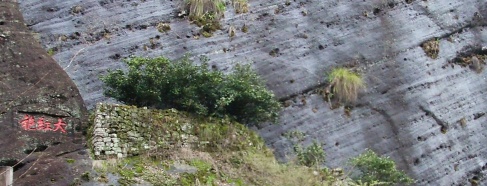
Dà hóng páo (大红袍) is the most celebrated of the Wǔyí rock oolongs (岩茶 yánchá) — a charcoal-roasted, heavily oxidised oolong from the Wǔyí Shān nature reserve in Fújiàn province, distinguished by its persistent mineral finish known as yán yùn (岩韵, "rock rhyme"). The name originally referred to six ancient mother trees on a cliff above the Temple of the Heavenly Heart (天心永乐禅寺); today it covers both verified clonal descendants and — in 99% of cases — high-grade blended yánchá from ròuguì (肉桂, "cinnamon"), shuǐxiān (水仙, "narcissus"), and sometimes tiěhàn páo (铁罗汉, "iron arhat") or bái jī guān (白鸡冠, "white cockscomb") cultivars.
How did Dà Hóng Páo get its name?
The most popular origin legend: a Míng dynasty scholar named Dīng Xiǎn (丁显) travelling to the imperial examinations collapsed from sunstroke in the Wǔyí mountains. Monks at Tiān Xīn Temple (天心永乐禅寺) treated him with a tea decoction — within a couple of hours the illness subsided. After passing the examinations with distinction and returning as a jìnshì (进士) official, he draped his red official robe (dà hóng páo) over the bushes in gratitude — giving the tea its name.
The age of the original trees is debated: in 2008, Chinese botanists from Zhejiang University estimated 340–370 years, but temple records mention these bushes as early as the Southern Sòng dynasty (12th–13th centuries). Six surviving mother trees grow at approximately 600 m elevation in a sheltered cliff crevice above the "Heaven's Heart" terrace (九龙窠). In 2006, the People's Republic of China listed them as key national cultural relics.
The Mother Trees
The last commercial harvest from the six mother trees took place in 2005. The final crop was auctioned in Beijing: 20 grams sold for 208,000 RMB (approximately USD 25,000 at the time). The trees are no longer harvested commercially — all material is retained by the state for reserves and museums. In 2022, a tiny batch (50 g) was given to Tiān Xīn Temple for ritual brewing; none is sold to outsiders.
Since the 1980s, cuttings have been propagated at the Wǔyí Academy of Tea Science (武夷山市茶叶科学研究所). This clonal material (无性繁殖) underwent molecular verification in 2002 — genetic analysis confirmed identity with the original trees. Authenticated single-clone descendants are sold as "纯种大红袍" (chúnzhǒng dà hóng páo, pure-strain big red robe). Annual production is no more than 500–800 kg, with all quantities sold through auctions and closed private sales.
What is commercial Dà Hóng Páo?
The vast majority of dà hóng páo in commerce is a blend (拼配 pīnpèi) of two to five Wǔyí cultivars — typically dominated by ròuguì (which provides pungency, spice, and yán yùn) and shuǐxiān (which provides body, sweetness, and a thick liquor). Sometimes qí lán (奇兰, "rare orchid") or a different shuǐxiān form is added. The best Wǔyí blenders — such as Xuān Dé (宣德) at the Qī Liù (琪六) factory — combine materials from different growing sites, vintages, and roast levels to achieve a stable profile.
The categories in practice:
- Zhèng yán dà hóng páo (正岩大红袍): Blended from material grown in the protected Sānkēng Liǎngjiàn zone (三坑两涧) — the Huìyuàn (慧苑坑), Niúlánkēng (牛栏坑), and Dǎoshuǐkēng (倒水坑) gullies, plus the Liúxiāng (流香涧) and Wùyuán (悟源涧) streams. Highest commercial grade — 80–120 RMB per 50 g from reliable sellers.
- Bàn yán / zhōu chá grades (半岩/洲茶): Blended from outer-zone material (Shīmiào, Xiānrén, Chóng'ān); 2–5 times cheaper.
- Chúnzhǒng dà hóng páo (纯种大红袍): Certified single-clone from verified mother-tree descendants; rarest grade — from 800 RMB per 50 g and above.
If-then quality rule: If the label says "大红袍" without specifying zhèng yán origin or chúnzhǒng cultivar → it is almost certainly a blend, which is not a defect — judge it on its own merits.
Flavour Profile
Quality dà hóng páo expresses yán yùn (岩韵, "rock rhyme") — a mineral persistence in the finish where the tea coats the throat with layered sweetness that slowly unfolds into fruity or honey notes. In Chinese tea language this is called "岩骨花香" — "rock bone, flower fragrance." It depends on the terpene scolopene, which concentrates in leaf from the mineral soil.
The character varies with roast level:
Medium roast (zhōnghuǒ 中火): Roasted grain, caramel, orchid, light citrus — the floral character of ròuguì comes through alongside the roasted notes.
Full roast (zúhuǒ 足火): Deep, rich, coal-roasted warmth. Dark dried fruit (dates, raisins), spice (cinnamon, clove), light smokiness. Less obvious aromatics, but greater depth and body.
Aged (3+ years post-roast): The roasted edge softens; fruit and flower notes re-emerge, mineral character deepens into earthy tones. Aged high-grade dà hóng páo is a separate category of experience, valued by collectors — it can evolve over 10–15 years.
According to Lín Zhìlèi's Wǔyí Yánchá (武夷岩茶, 2007), yán yùn requires the combination of Wǔyí's mineral-rich volcanic soil, the Sānkēng Liǎngjiàn microclimate, and traditional charcoal roasting — removing any one factor eliminates the character.
How is Dà Hóng Páo processed?
Processing follows the classic yánchá sequence:
- Harvest: Mature leaf — 3–4 leaves per shoot (typically early May from zhèng yán, late May from bàn yán).
- Withering: Sun-wither 2–4 hours, then indoor at 25–30°C — total 8–12 hours.
- Zuòqīng (做青): 8–12 cycles of tumbling and resting in bamboo trays — oxidation reaches 40–70%. For dà hóng páo, oxidation is closer to the upper range (60–70%) to develop dense body.
- Shāqīng (杀青): High-heat fixation in a wok at 180–200°C — stops oxidation and sets the aroma.
- Rolling: In a Bāozhǐ machine — leaf is rolled into tight "pearls" (up to 2 hours).
- First drying: Over lychee charcoal (荔枝炭 lìzhī tàn) at 120°C, 4–6 hours.
- Charcoal roasting (焙火): In bamboo baskets over red-hot charcoal — 2–4 cycles of 12–24 hours each, with 3–6 month resting periods between cycles. High-grade dà hóng páo may undergo up to 4 cycles before final sale.
High-grade dà hóng páo may undergo 2–4 roasting cycles over months before final sale.
How to brew Dà Hóng Páo
| Parameter | Value |
|---|---|
| Water temperature | 100°C — cooler water gives flat, soapy results (fails to extract yán yùn) |
| Vessel | Yíxīng zǐshā (紫砂) teapot for daily brewing (thickens body); porcelain gàiwǎn for tasting (clearer aroma) |
| Leaf ratio | 7–8 g per 100 ml (6 g if young and heavily roasted) |
| Rinse | 5–10 s, discard — opens leaf and removes dust |
| First infusion | 15–20 s |
| Subsequent infusions | Add 10–15 s each round |
| Infusion count | Minimum 7–10; for zhèng yán quality, up to 14–16 |
| Pre-warming | Essential — pre-warm gàiwǎn, pitcher, and cups; cold porcelain kills roast aromatics |
The third and fourth infusions typically show the most complexity; early infusions are roast-forward (roasted grain), later ones (7+ flash) reveal underlying mineral character (岩茶子 yán chá zǐ) and fruity sweetness.
Identifying Quality
- Yán yùn: Does the finish linger for 30–60 seconds and evolve? Does it feel like the tea adheres to the throat, not merely leave dryness?
- Roast balance: Roasted notes (grain, charcoal) should enhance, not dominate; if the tea smells only "burnt" with no floral or fruity layer, the roast is flawed.
- Infusion count: Quality tea sustains 7+ infusions; low-grade material (often from old leaf or over-roasted) exhausts after 2–3.
- Spent leaf: Open the gàiwǎn after the session — leaves should be intact, evenly coloured (brown-green to dark brown), with no black or charred pieces; the wet-leaf scent should be sweet with date notes.
Related
- Yánchá — Rock Oolong — the category overview
- Wǔyí Shān — the growing region
- Wǔyí Yánchá — Cultivars and Production — cultivar detail
- Gōngfū Brewing Guide
- Yíxīng Zǐshā — dedicated teapot for yánchá
FAQ
Is dà hóng páo oolong or black tea? Dà hóng páo is an oolong — specifically a heavily oxidised (40–70%), charcoal-roasted rock oolong (岩茶 yánchá) from the Wǔyí Shān nature reserve. The dark dry leaf and strong roasted flavour cause frequent confusion with black tea, but the processing and cup character are fundamentally different: mineral, layered, and many-steep. Black tea is fully oxidised; dà hóng páo's leaf centre remains green.
Why is dà hóng páo so expensive? Three reasons converge: the six original mother trees are state property and no longer harvested; verified clonal (chúnzhǒng) material is produced in tiny quantities (≤ 1 ton/year); and the highest-grade blended zhèng yán material comes from the tiny Sānkēng Liǎngjiàn zone (total fertile terrace area less than 500 ha). Affordable commercial blends exist — price reflects grade and origin, not fraud.
How is blended dà hóng páo different from chúnzhǒng dà hóng páo? Blended (pīnpèi) dà hóng páo combines 2–5 Wǔyí cultivars — ròuguì, shuǐxiān — for balance and consistency. Chúnzhǒng dà hóng páo is a verified cutting-propagated clone from the six original mother trees — a rare product with a distinct floral profile. Blended is the standard; chúnzhǒng is a collector's item.
How do I brew dà hóng páo? Use 100°C water — cooler water gives flat results. 7–8 g per 100 ml, in a yíxīng teapot or gàiwǎn. Rinse 5–10 seconds, discard. First steep 15–20 seconds; add 10–15 seconds per round. Quality yánchá yields 7–10+ infusions. Pre-warm all vessels — essential.
What does dà hóng páo taste like? Roasted grain, dark dried fruit (dates, raisins), caramel, mineral. Medium-roast versions show orchid and spice. The defining characteristic is yán yùn: a mineral persistence that lingers in the throat after swallowing and slowly evolves into sweetness. In top-grade material, it embodies "rock bone, flower fragrance."
Related products
Comments (0)
No comments yet. Be the first!
Sign in — Sign in to join the discussion.