
The Six Categories of Chinese Tea
The Six Categories of Chinese Tea
Chinese tea is classified into six categories based on processing method and degree of oxidation — not the plant variety. All six categories come from Camellia sinensis — including its varieties large-leaf var. assamica and small-leaf var. sinensis — but specific cultivars and growing conditions (bush or tree form) shape the flavour of the finished tea; what differs between categories is what happens to the leaf after picking. The six-category framework was codified in Chinese national standard GB/T 30766-2014 (Classification of Tea), which defines each category by processing method and final product character.
| Category | Oxidation | Key character |
|---|---|---|
| Green (绿茶 lǜchá) | 0% | Fresh, vegetal, floral |
| White (白茶 báichá) | 5–15% | Delicate, sweet, ages well |
| Yellow (黄茶 huángchá) | 10–20% | Mellow, rare |
| Oolong (乌龙茶 / 青茶) | 15–85% | Enormous range: floral to roasted |
| Red (红茶 hóngchá) | 80–100% | Malty, fruity, sweet |
| Dark (黑茶 hēichá) | Post-fermented | Complex, ages, earthy |
Green Tea (绿茶 lǜchá)
Oxidation: 0% — enzymes halted immediately after picking via heat fixation (杀青 shāqīng).
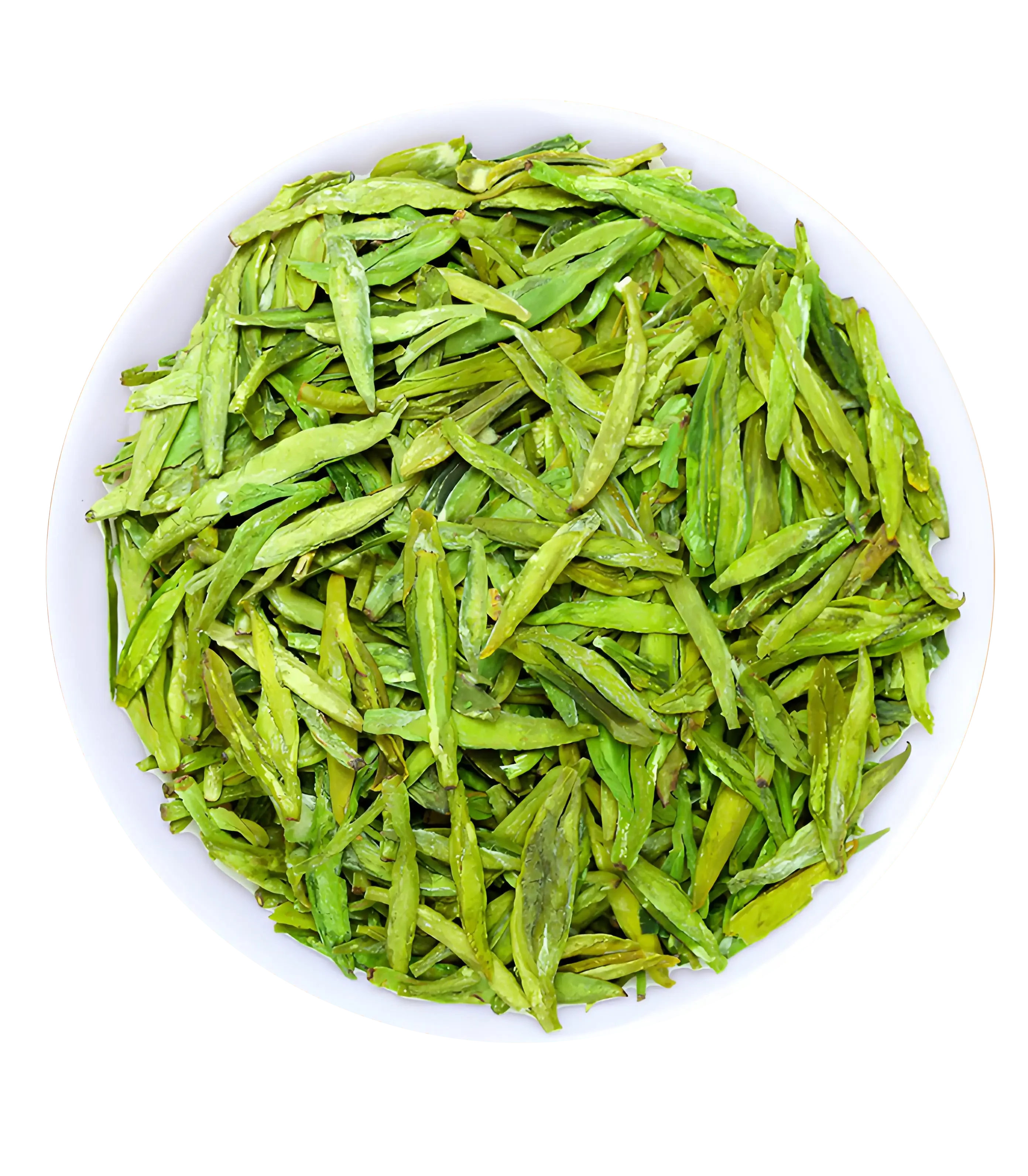
The leaf is pan-fired in a wok at 180–260 °C (炒青 chǎoqīng) or steamed (蒸青 zhēngqīng) within hours of picking to halt all enzymatic activity, preserving fresh-leaf character: vegetal, grassy, floral, sometimes nutty. In China, pan-firing dominates: it imparts characteristic nutty-chestnut and floral notes. Steaming — typical of Japanese tea — yields brighter, "sea-vegetable" umami notes. The result is a tea with the character of the fresh leaf: vegetal, grassy, floral, occasionally nutty. Liquor colour ranges from pale-straw to bright green depending on cultivar and processing.
Pan-fired greens dominate Chinese production: from chestnut-nutty (西湖龙井 Xīhú Lóngjǐng, Hangzhou, Zhejiang) to intensely floral (碧螺春 Bìluóchūn, Taihu Lake, Jiangsu). Steamed greens — more common in Japan — tend toward stronger vegetal and umami notes. The influence of cultivar and terroir is significant: Lu'an tea from Anhui (六安瓜片 Liù'ān Guāpiàn) has a melon-like, nuttier profile compared to the grassy Zhejiang Huangshan Maofeng (黄山毛峰).
If-then storage rule: Green tea does not age. Store airtight, refrigerated (0–5°C); consume within 12–18 months of harvest; at room temperature, it deteriorates within 3–6 months.
Shop examples: Bì Luó Chūn
White Tea (白茶 báichá)
Oxidation: 5–15% — natural enzymatic activity during extended withering (萎凋 wěidiāo), then gentle drying at 40–50 °C.
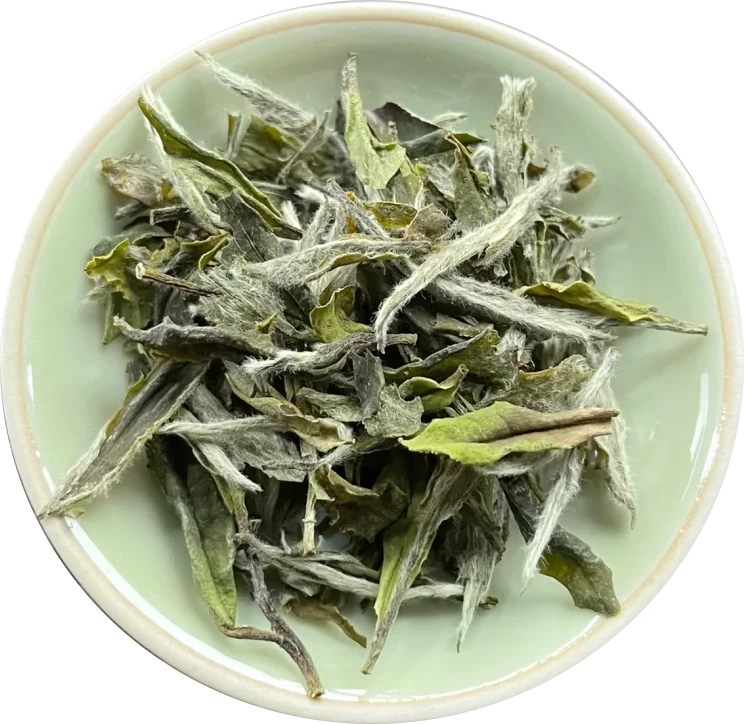
The simplest processing: picked leaf is spread to wither for 36–72 hours in cool, well-ventilated conditions — no fixation, no rolling, no shaping. Quality is almost entirely dependent on raw material and precise withering; terroir strongly shapes the result. Traditional producing regions: Fuding (福鼎) and Zhenghe (政和), both in Fujian province. Fuding white tea is softer and sweeter; Zhenghe tea has a grassier, slightly smoky note.
The main grades: bud-only (银针 yínzhēn — "silver needles") → bud-plus-leaf (牡丹 mǔdān — "peony") → leaf-dominant (寿眉 shòuméi / 贡眉 gōngméi — "longevity eyebrows" and "tribute eyebrows").
Fresh white tea: white flowers, fresh hay, melon, light sweetness. Aged (3+ years): honey, dried fruit, deep floral warmth, sometimes medicinal-herb undertones. Unlike most teas, white tea improves with careful dry storage over years and decades. The best aged white tea comes from Fuding leaf, stored in a cool pantry at 50–65% humidity.
Shop examples: Bái Háo Yín Zhēn
Yellow Tea (黄茶 huángchá)
Oxidation: 10–20% — similar to green but with a sealed-yellowing step added (闷黄 mènhuáng, "yellowing in enclosure").
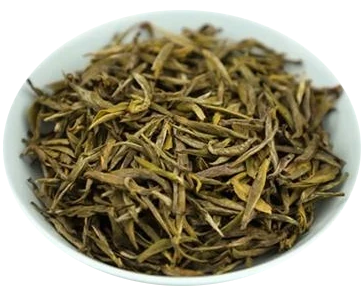
The rarest category — less than 1% of Chinese tea production. Processing resembles green, with the addition of an extra step: the fixed leaf is piled and covered while warm and slightly moist (40–50 °C) in cloth bags, bamboo baskets, or paper for several hours or even 2–3 days. This allows mild non-enzymatic oxidation and Maillard reactions to occur, removing green tea's "grassy" sharpness and developing a mellow, slightly fermented sweetness reminiscent of cooked peas, cream, or baked goods.
Notable examples: Jūn Shān Yín Zhēn (君山银针) — from Junshan Island on Lake Dongting, Hunan; Méngdǐng Huángyá (蒙顶黄芽) — from Mengding Mountain, Sichuan; Mògān Huángyá (莫干黄芽) — from Zhejiang; Huòshān Huángyá (霍山黄芽) — from Anhui.
Oolong Tea (乌龙茶 / 青茶 qīngchá)
Oxidation: 15–85% — the widest range of any category, with optional roasting (烘焙 hōngbèi).
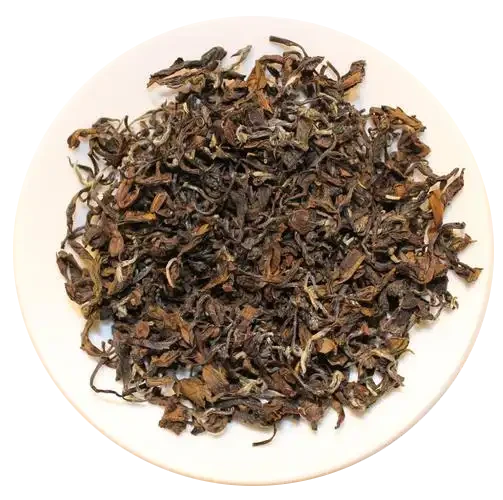
Oolong is defined by partial oxidation controlled through repeated zuòqīng (做青) cycles of agitation and rest: the leaf is shaken to lightly bruise the edges, allowed to rest, and repeated 4–8 times over 8–12 hours. The range spans from lightly oxidised jade-green pellets (tiě guānyīn qīngxiāng, 15–25%) to heavily oxidised and roasted rock oolongs (yánchá, 60–80%). Profiles within this range: floral, milky, fruity, nutty, mineral, roasted, spiced.
Major oolong regions:
Wǔyí Shān (武夷山, Fujian) — rock oolongs (yánchá), charcoal-roasted: Dà Hóng Páo (大红袍), Tiě Luóhàn (铁罗汉), Bái Jī Guān (白鸡冠).
Ānxī (安溪, Fujian) — tiě guānyīn, including light style (qīngxiāng) and roasted style (nóngxiāng / 浓香).
Fènghuáng (凤凰, Guangdong) — dāncōng (单丛) single-bush oolongs with over 100 aromatic varieties: jasmine, grapefruit, honey.
Táiwān — high-mountain oolongs (高山茶 gāoshānchá) from elevations of 1200–2500 m (Alishan, Dongding, Baozhong) and dongding (冻顶 dòngdǐng) — medium-oxidised with roasting.
Shop examples: Tiě Guānyīn, Dà Hóng Páo, Yánchá overview
Red Tea (红茶 hóngchá)
Oxidation: 80–100% — fully oxidised before heat fixation. Key step is rolling (揉捻 róuniǎn), which releases juice and initiates fermentation.
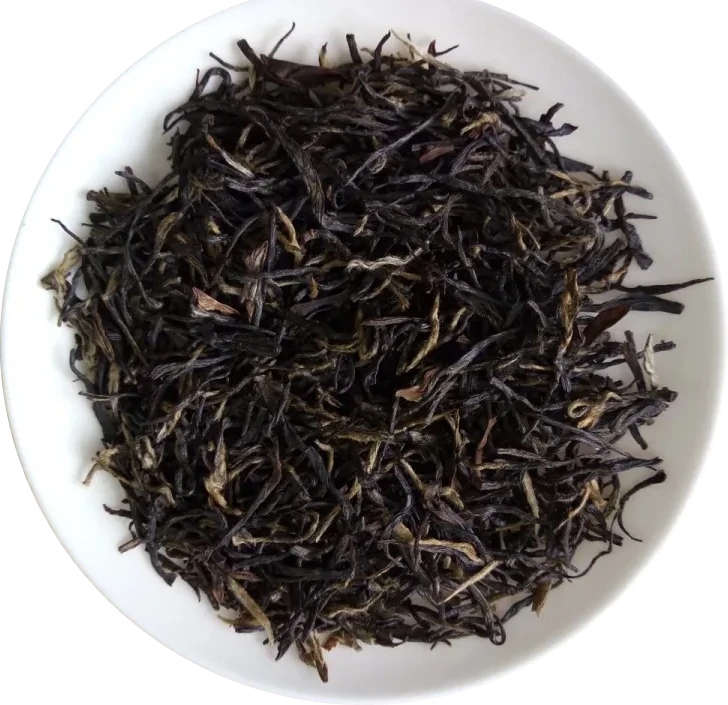
Called "black tea" in the West (from dark leaf colour); "red tea" in China (from the red-amber liquor). Full oxidation develops malty, fruity, and floral notes. Chinese red teas tend toward sweetness and floral complexity compared to the brisk tannin of Assam or Ceylon. A key difference: Chinese processing uses whole-leaf rolling (or cutting/crushing for cheaper grades), whereas Indian processing uses CTC (crush-tear-curl).
Notable Chinese red teas:
Zhèngshān Xiǎozhǒng (正山小种, Lapsang Souchong) — Wuyi; traditionally smoke-dried over pine wood (the variety smoked souchong).
Diān Hóng (滇红, Yunnan Gold) — Yunnan; large golden buds, rich, caramel-like.
Jīn Jùn Méi (金骏眉, "Golden Jun Mei") — Wuyi; very fine bud tips, light and fruity.
Qímén Hóngchá (祁门红茶, Keemun Red) — Anhui; a dense "dry-fruit" aroma.
Dark / Fermented Tea (黑茶 hēichá)
Oxidation: post-fermentation — microbial activity after fixation, either slow (shēng 生) or accelerated (shú 熟).
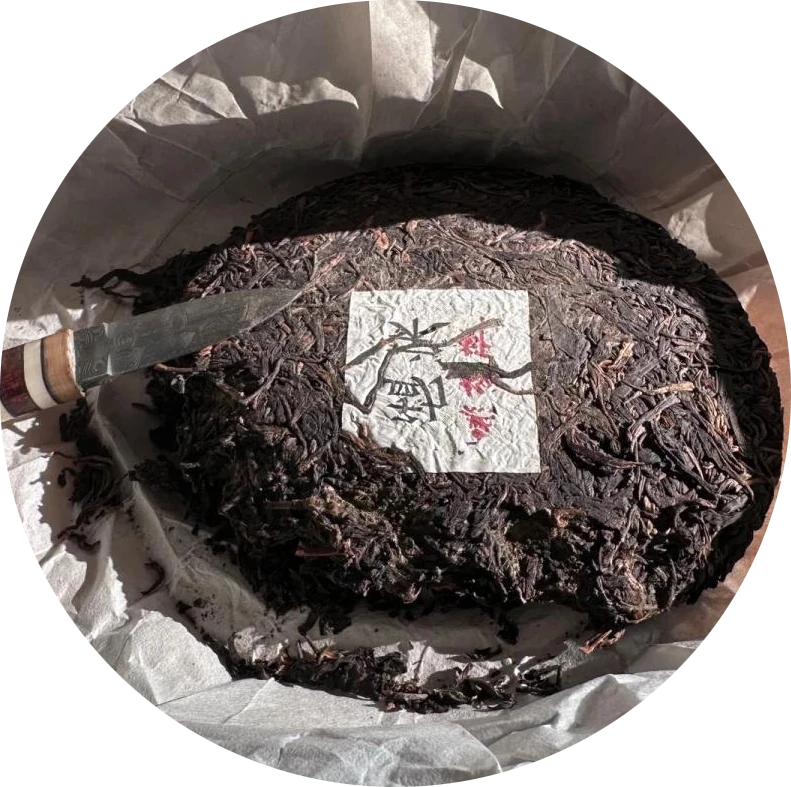
Dark tea undergoes microbial fermentation — distinct from the enzymatic oxidation of oolongs and red teas. The most famous is pǔ'ěr (普洱茶 pǔ'ěrchá) from Yunnan, compressed into cakes (饼茶 bǐngchá), bricks (砖茶 zhuānchá), or tuóchá (沱茶). Raw pǔ'ěr (shēngchá 生茶) is compressed and aged slowly for years to decades. Ripe pǔ'ěr (shúchá 熟茶) undergoes accelerated wet-pile fermentation (渥堆 wòduī) at 50–65 °C and 80–95% humidity for 45–60 days to simulate aging. The quality of shu puer depends heavily on the master's skill: poor piling yields earthy, "raw" flavours; good piling produces a chocolate-dried fruit profile with hints of dates and clay.
Other dark teas:
Liù Bǎo (六堡 liùbǎo, Guangxi) — loose or compressed, with a bright red liquor and sweet, medicinal aroma.
Fú Zhuān (茯砖 fúzhuān, Hunan) — bricks with characteristic "golden flowers" (金花 jīnhuā) — Eurotium cristatum fungus, which imparts a sweet, honey-bread flavour.
Qīng Zhuān (青砖 qīngzhuān, Hubei) — compressed, dense, with smoky and berry notes.
Dark tea ages almost indefinitely under correct conditions (60–70% humidity, 20–25 °C, no foreign odours) and is treated as an investment by serious collectors. Some cakes from the 1990s sell for tens of thousands of dollars.
Related
- Gōngfū Brewing Guide
- Bì Luó Chūn — green
- Bái Háo Yín Zhēn — white
- Tiě Guānyīn — oolong light
- Yánchá / Dà Hóng Páo — oolong dark
- Pǔ'ěr — dark fermented
FAQ
Which category should a beginner start with?
Oolong is the best entry point — either a light style (qīngxiāng tiě guānyīn) or a roasted rock oolong (yánchá). Oolong forgives brewing mistakes, stores for years at room temperature without degrading, and shows the full range of Chinese tea without the risk of disappointment. Green tea demands freshness and cold storage — without it, flavour fades within 2–3 months. Aged pǔ'ěr is not a beginner tea.
Where do jasmine tea and other scented teas fit in the six categories?
Scented teas are not a seventh category — they are a processing technique applied on top of an existing category. Jasmine tea (茉莉花茶 mòlì huāchá) is typically a green tea base from Fujian or Sichuan, repeatedly layered with fresh jasmine blossoms (3–6 times on average). Osmanthus oolong and rose pǔ'ěr work similarly. The base tea determines the category; the scenting is an additional processing step. Scented teas are very popular in China and historically were the primary form in which tea reached European markets.
Is herbal tea (chamomile, peppermint) part of the six Chinese tea categories?
No. The six Chinese categories all come from Camellia sinensis; herbal teas (tisanes) come from entirely different plants and contain no tea at all. In Chinese, these are called 花草茶 (huācǎochá, "flower-herb tea") or 草本茶 (cǎoběnchá, "herbal tea") — distinct terms from 茶 (chá), which always refers to Camellia sinensis products. Chinese herbal preparations have their own long tradition; they are not classified under the six-category framework.
Does a higher oxidation level mean more caffeine?
No — oxidation level and caffeine content are not directly linked. Caffeine content is primarily determined by harvest material (buds have more caffeine than mature leaves), cultivar, and growing conditions. A bud-heavy green tea like Silver Needle can have more caffeine than a mature-leaf oolong. The popular assumption that black/red tea always has more caffeine than green tea is a simplification that does not hold for premium teas.
Can the same tea leaves be processed into different categories?
Yes — this is precisely the point of the six-category framework. The raw material (fresh Camellia sinensis leaf) is identical before processing begins. Picking the same leaf from the same tree and processing it differently produces a green tea, a white tea, or a red tea. This is why the category defines how the leaf was processed, not what it came from. In experimental tea production, producers sometimes process the same batch two ways to compare; the resulting teas can taste entirely different.
Коментари (0)
Все още няма коментари. Бъдете първи!
Вход — Влезте, за да участвате в дискусията.