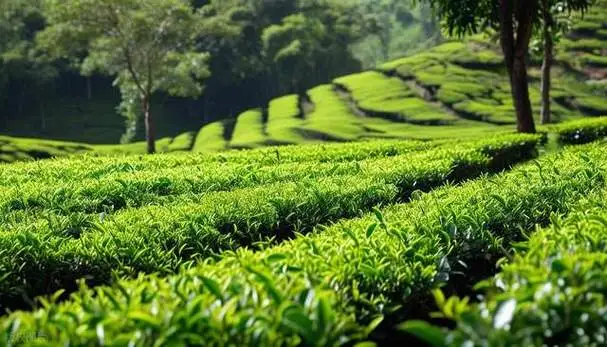
Chinese Tea Regions — A Geographic Guide
Chinese Tea Regions — A Geographic Guide
China produces tea across more than twenty provinces and autonomous regions, but production is concentrated in eight or nine regions whose geography, climate, and craft tradition define the character of the teas they make. This guide maps the major regions and their most celebrated teas.
Why geography matters
Tea is deeply shaped by where it grows. Altitude determines temperature range and UV exposure — slower-growing high-altitude leaves accumulate more aromatic compounds, especially amino acids. Soil chemistry affects mineral character. Humidity and rainfall influence withering conditions and the ease of fermentation. The same cultivar planted in different provinces produces measurably different tea — this is not a marketing gimmick but an empirical fact.
China's major tea regions divide roughly into four climate bands:
- South (Guangdong, Guangxi, Hǎinán) — subtropical, year-round growing, up to four or five harvest seasons
- Southeast (Fujian, Zhejiang, Jiangxi) — humid, warm summers, distinct seasons; the spring harvest is the most valued
- Southwest (Yunnan, Sichuan, Guìzhōu) — high-altitude plateau, ancient forest trees, a dry and cool winter season
- Central (Hunan, Hùběi, Ānhuī) — continental humidity, four seasons, abundant fog
Fujian (福建) — the most diverse tea province
Fujian is the single most important province in Chinese tea — the origin of white tea, rock oolongs (yánchá, 岩茶), Minnan light oolongs, and the smoked red teas of Tōngmù village. The province divides into three distinct tea zones: the Wǔyí Mountains in the north, Fúdīng-Zhènghe in the northeast, and Minnan in the south.
Wǔyí Mountains (武夷山) — northern Fujian
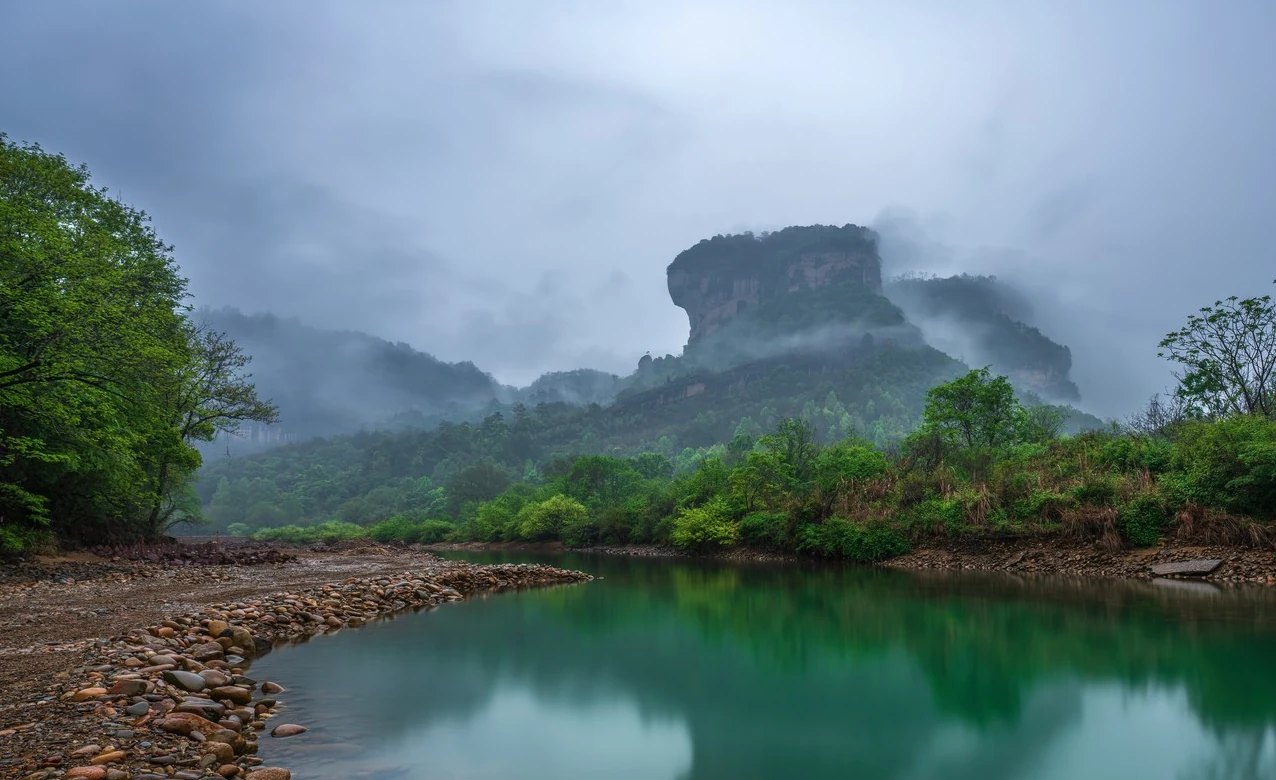
The Wǔyí Mountains — a range of red sandstone peaks and ravines of the dānxiá (丹霞地貌) landform covering about 70 km², a UNESCO World Heritage site since 1999 — produce the world's most complex oolongs and one of its oldest red teas. The microclimate is extremely humid, with moist ravines alongside dry slopes. The mineral-rich soil — zhènyán (正岩, "true rock") — is a red loam with gravel. This geology gives teas grown here a distinctive stone-fruit depth called yán yùn (岩韵, literally "rock rhythm" or "rock rhyme").
Within Wǔyí there are three distinct zones: zhènyán (true rock — the core area, especially the Lǐ Sānchéng (李三城) hollows), bànyán (半岩, "half rock" — slopes outside the protected core), and zhōuchá (洲茶, "river tea" — valleys and terraces along the river). The price and flavour differences between them are very noticeable.
Wǔyí rock oolongs are heavily oxidised (typically 40–70%) and roasted (bèihuǒ, 焙火), ranging from a light green roast to dark chocolate through several firing cycles. The most famous cultivars (míngcóng, 名丛): Dà Hóng Páo (大红袍, "Big Red Robe"), Ròuguì (肉桂, "cinnamon" — with bright cinnamon-malt notes), Shuǐxiān (水仙, "narcissus" — soft, with orchid character), as well as Qílán (奇兰, "rare orchid") and Bā Xiān (八仙, "eight immortals"). The mother bushes of Dà Hóng Páo grow on the Jiǔlóngkē (九龙窠, "Nine Dragon Gulley") cliff; their age is estimated at 350 years, but these are legendary trees — not the source of all commercially sold Dà Hóng Páo. → Wǔyí Rock Oolongs · What is Rock Oolong? · Dà Hóng Páo · Wǔyí Shān
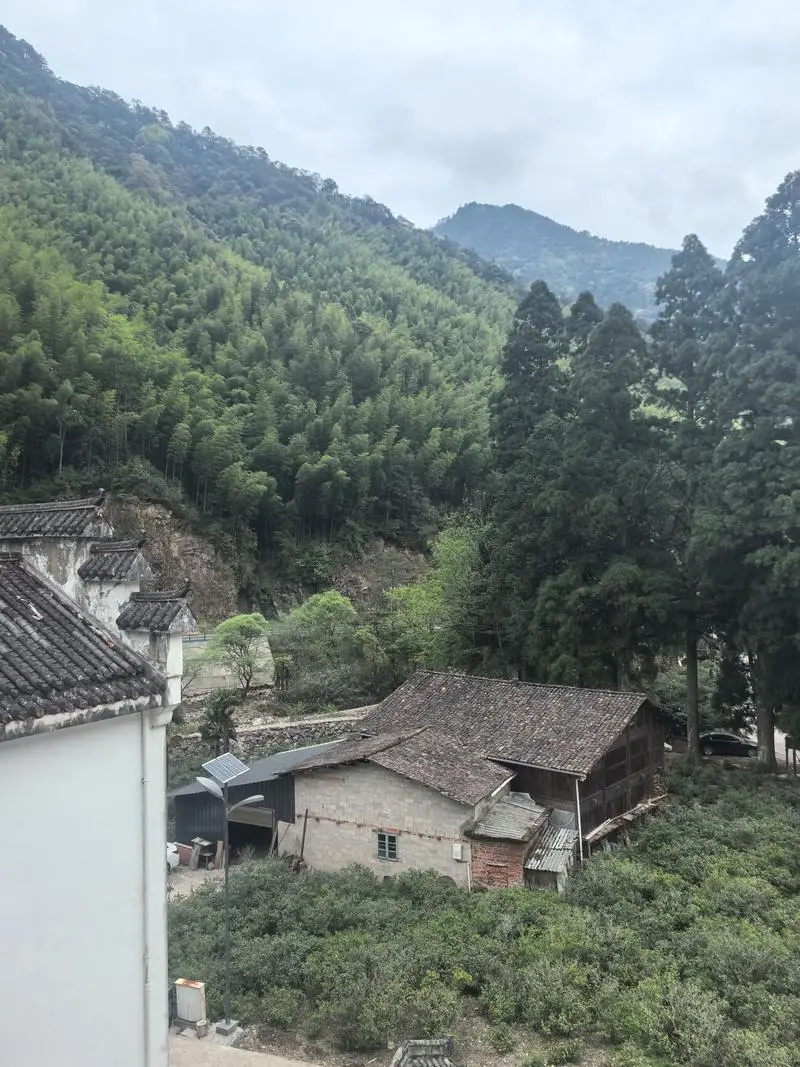
Wǔyí red teas come from Tōngmùguān (桐木关) village deep within the reserve. Zhèngshān Xiǎozhǒng (正山小种, "true rock — small variety") is the world's first red tea, documented from the mid-17th century. Its defining characteristic is smoking over pinewood. Jīn Jùn Méi (金骏眉, "golden beautiful eyebrow") is made exclusively from unopened buds — one kilogram requires 50,000–60,000 buds; it was created in 2005 at a factory in Tōngmù. The price per kilogram ranges from 1,500 to over 5,000 RMB. The cultivar used is Càichá (菜茶, "vegetable tea") — a local population of small-leaf bushes. → Wǔyí Red Teas
Northern Fujian — white tea
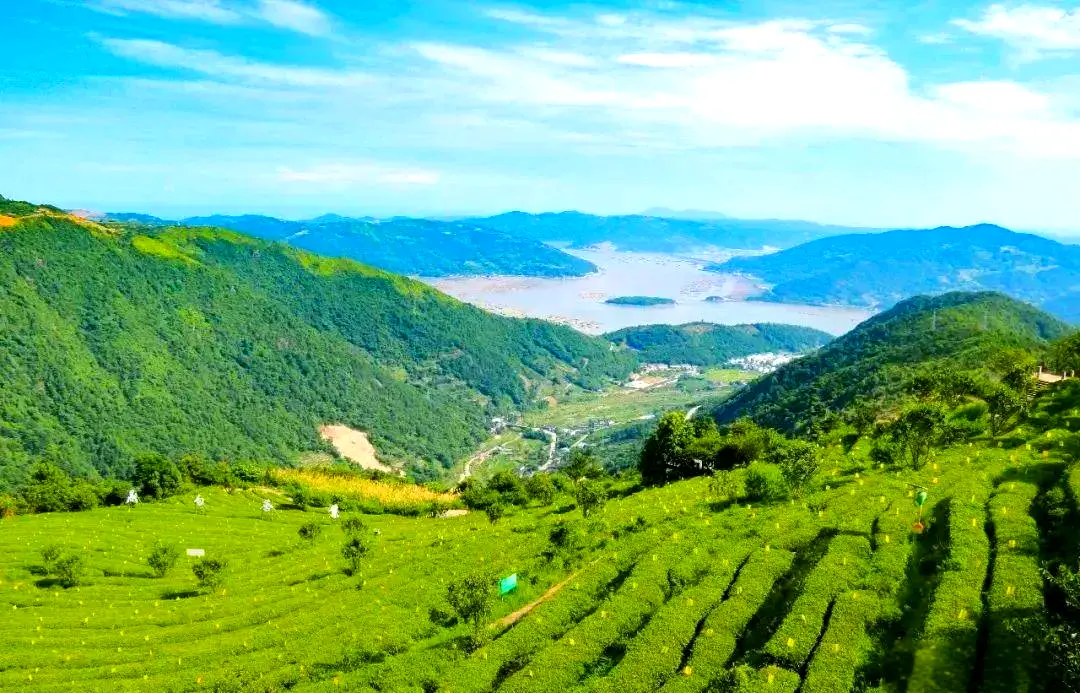
Fúdīng (福鼎) and Zhènghe (政和) districts produce China's finest white tea. Both are historic centres, but with different traditions. In Fúdīng, the leaf is withered in sunlight and indoors, using the Dà Bái Chá (大白茶, "big white tea") cultivar. In Zhènghe, they use only shade-withering and a mix of Dà Bái (大白) and local cultivars. Bái Háo Yín Zhēn (白毫银针, "silver needles") uses only buds, harvested in March–April. Bái Mǔ Dān (白牡丹, "white peony") consists of one bud plus two or three young leaves. An important note: leaf age — within 1–2 days of unfurling — is critical for Yín Zhēn; if left longer, the bud begins to open and the tea is no longer considered premium. → Bái Háo Yín Zhēn · Bái Mǔ Dān · White Tea Overview
Minnan (闽南) — southern Fujian
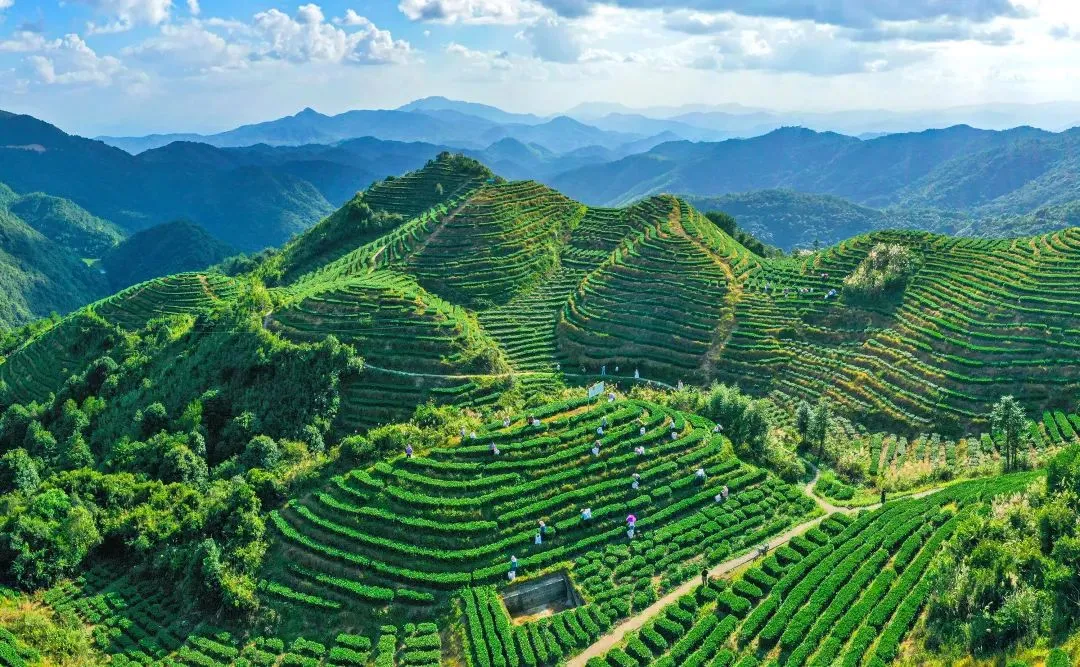
The southern Fujian lowlands produce light, floral oolongs from lush green-processed leaf — the stylistic opposite of northern rock tea. Oxidation levels are generally 15–30%, and roasting is typically light to medium.
Ānxī (安溪): Tiě Guānyīn (铁观音, "Iron Bodhisattva of Mercy") is the most consumed oolong in China. The cultivar is planted over tens of thousands of hectares. Two roasting styles are distinguished: light (qīngxiāng, 清香 — green, floral, aromatic) and heavy (nóngxiāng, 浓香 — more caramelised and dense). There is also a distinction between "southern-line" (南线) and "northern-line" (北线) processing, which affects the retention of green colour. → Tiě Guānyīn
Zhāngpíng (漳平), Yǒngchūn (永春), and surrounding areas: less mass-produced but valuable cultivar oolongs: Měi Lán Xiāng (梅兰香, "plum and orchid aroma"), Běi Bù Lǎo (北部老, "old northern") — bushes aged 30–50 years that produce denser, richer tea. → Minnan Oolongs
Yunnan (云南) — ancient forests, aged teas
Yunnan is the oldest tea-growing region in the world — fossilised leaves dating back 25 million years have been found near Mount Líyuán (犁园) in Zhènyuán (镇沅) county. It is the source of pu-erh (普洱), China's most age-worthy tea. The province's defining feature is its ancient tea forest trees (gǔ shù, 古树), some over five hundred years old, whose large, dark leaves with thick cuticles produce raw material capable of decades-long aging. Commercial pu-erh is also made from garden bushes (tái dì chá, 台地茶) — higher-yielding but less capable of extended aging.
Xīshuāngbǎnnà (西双版纳)
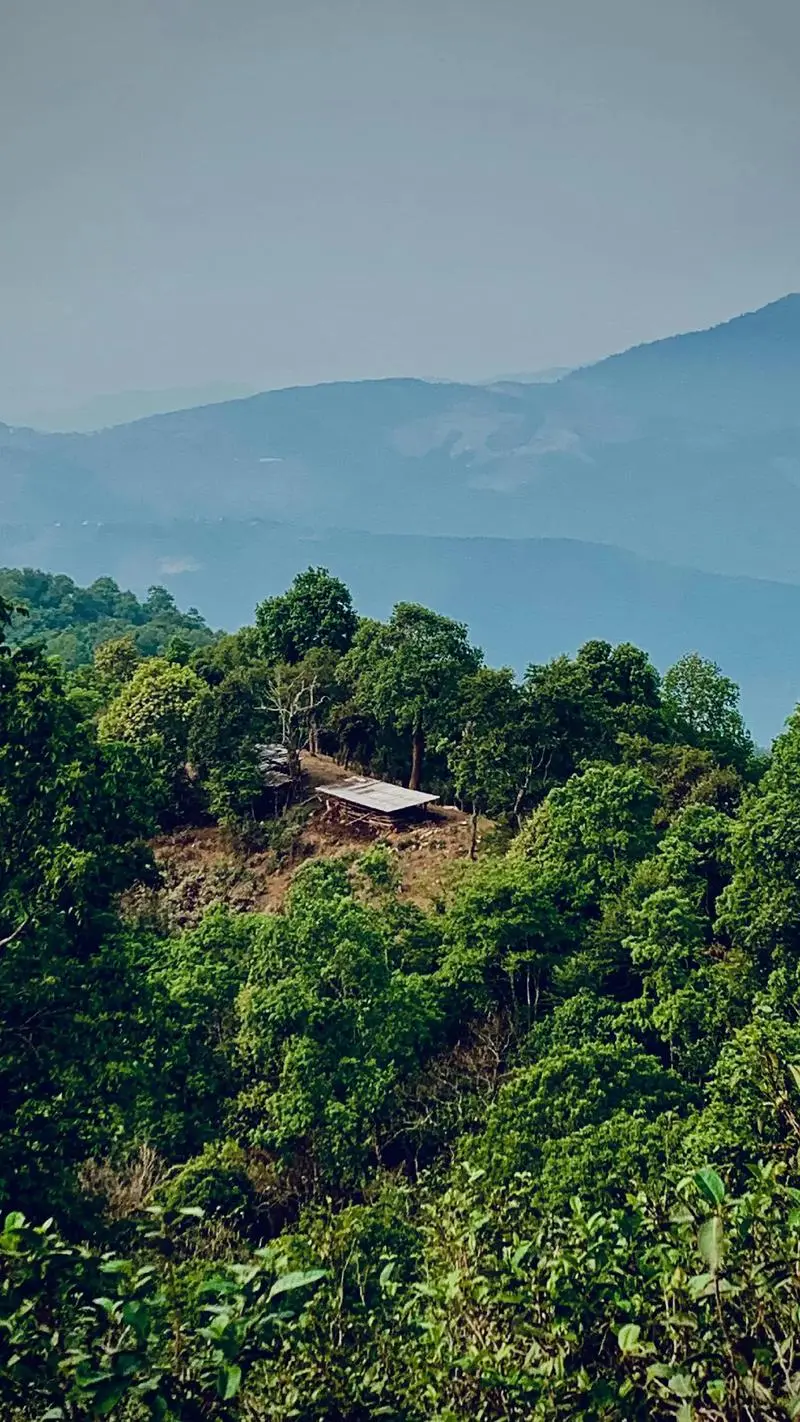
An autonomous prefecture in southern Yunnan bordering Myanmar and Laos. The climate is subtropical monsoon with two distinct seasons: wet (May–October) and dry (November–April). Key sub-regions:
- Měnghǎi (勐海) — major factories (Měnghǎi Tea Factory, 勐海茶厂, founded 1940), a centre for shú puerh production. The Bānzhāng (班章) sub-region includes the cult village Lǎobānzhāng (老班章).
- Yìwǔ (易武) — a classic zone for shēng puerh (especially Yìwǔ Shān, 易武山), known for its soft, sweet profile. Old estates (sòng zhài, 宋寨) have bushes 300–400 years old.
- Bùlǎng Mountain (布朗山) — the most expensive zone in Xīshuāngbǎnnà, with gǔ shù bushes up to 500 years old.
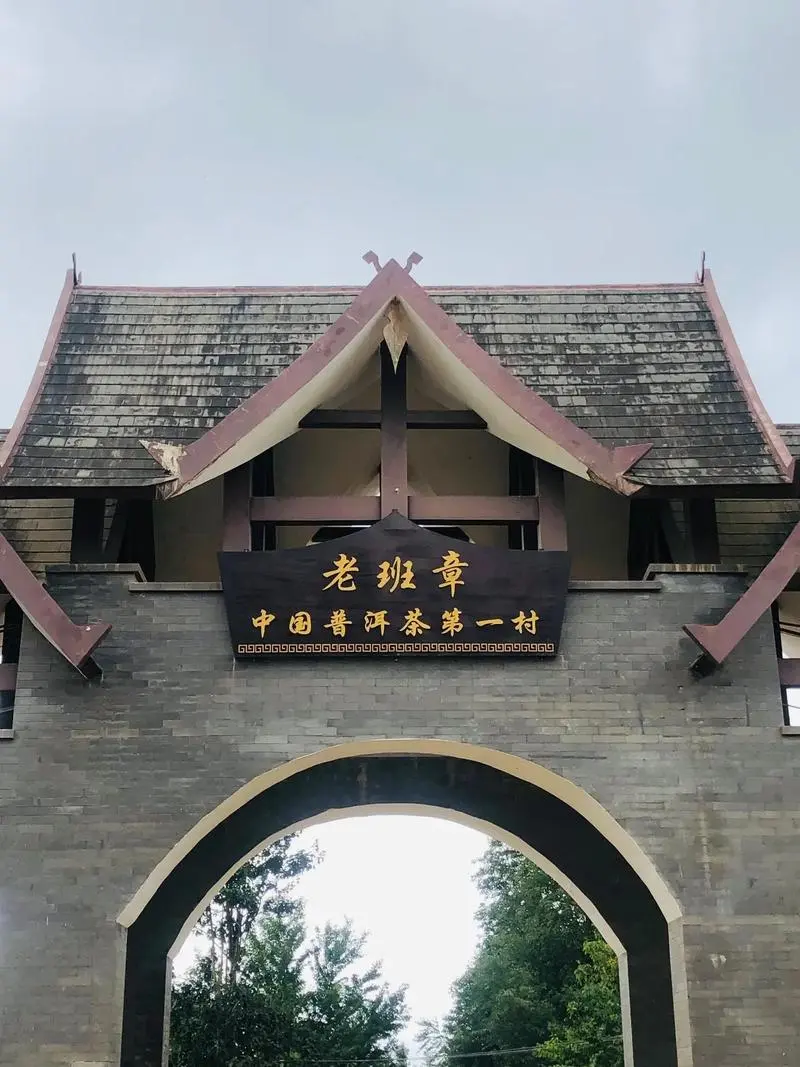
Lǎobānzhāng (老班章) village on Bùlǎng Mountain produces the most celebrated and expensive shēng puerh — raw material prices in 2024 reached 40,000–50,000 RMB per kilogram. Its character: very strong, slightly bitter, with a powerful, long, sweet aftertaste (huí gān, 回甘). → Pu-erh Overview · Shēng Pu-erh · Shú Pu-erh · Lǎobānzhāng
Líncāng (临沧)
A high-altitude growing region north of Xīshuāngbǎnnà (elevation 1,500–2,000 m). Key zones:
- Bīngdǎo (冰岛) — five villages in the Měngkù (勐库) area producing one of the sweetest and most fruity shēng puerhs with powerful huí gān. Prices for gǔ shù Bīngdǎo are comparable to Lǎobānzhāng.
- Jǐngmài (景迈) — a plateau with thousands of hectares of ancient tea gardens (up to 1,000 years old). Unlike wild forests, this is an agroforestry system created by the Dǎi and Lāhù peoples. Jǐngmài tea is light, with a bright floral and fruity character, less dense than Bānzhāng.
Diānhóng — Yunnan red tea
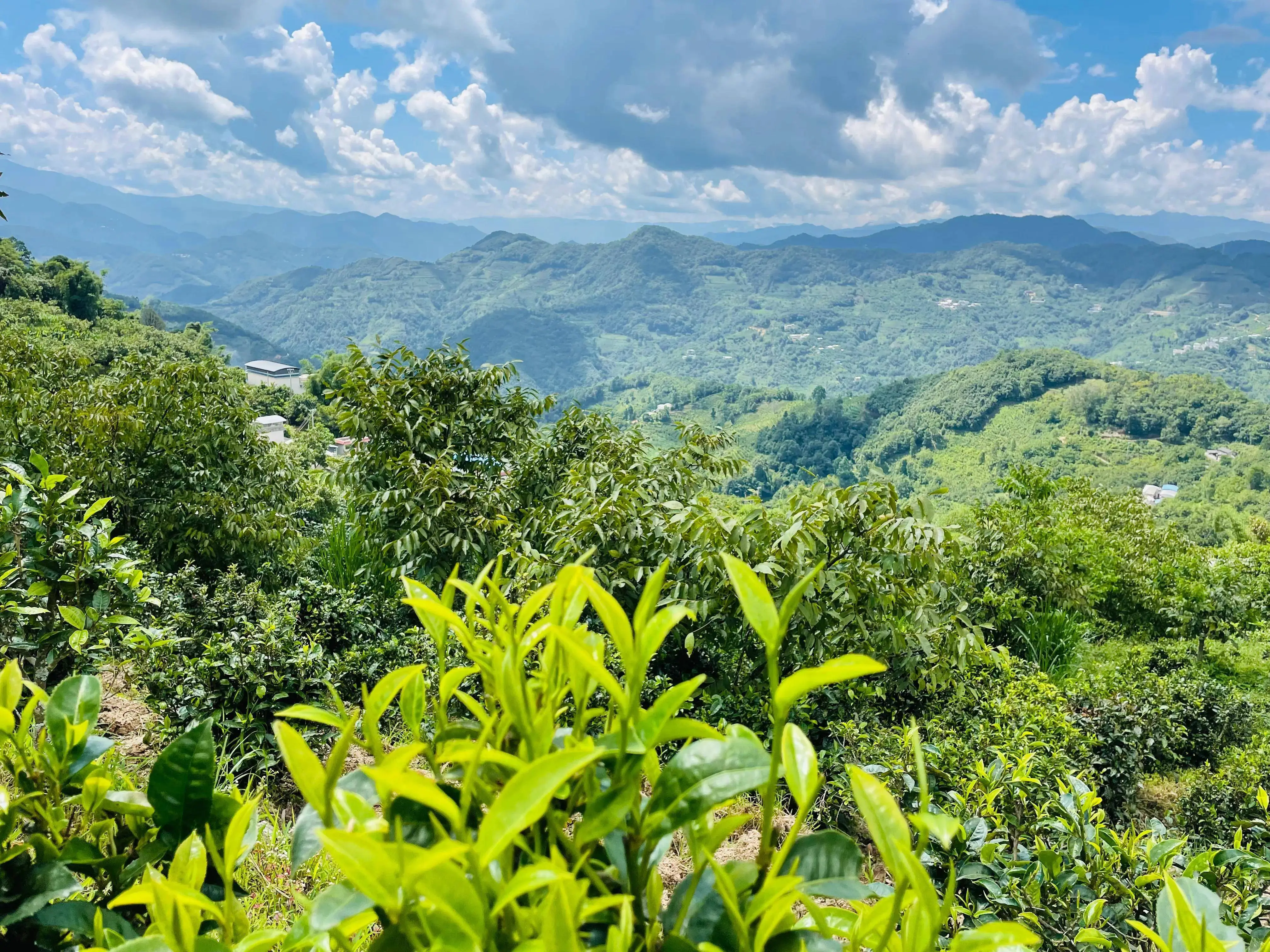
The Fèngqìng (凤庆) and Líncāng counties produce Diānhóng (滇红) using the same large-leaf Āsāmică family trees (变种云南大叶种, biànzhǒng Yúnnán dà yè zhǒng). Harvest begins in March, with the best being spring tea (chūn chá, 春茶). Diānhóng is full-bodied, malty-sweet, with characteristic golden tips (fuzzy bud tips). A variant is Diānhóng Gōngfū (滇红工夫) — hand-rolled and processed. → Yunnan Red Tea
Guangdong (广东) — Phoenix Mountain and Chaozhou tradition
Guangdong is home to Fènghuángshān (凤凰山, Phoenix Mountain), the source of Dāncōng (单丛, "single bush") oolongs, and to Cháozhōu (潮州) — the city whose gōngfū chá (工夫茶) tradition shaped a distinctive style of Chinese tea ceremony.
Fènghuáng Mountain (凤凰山)
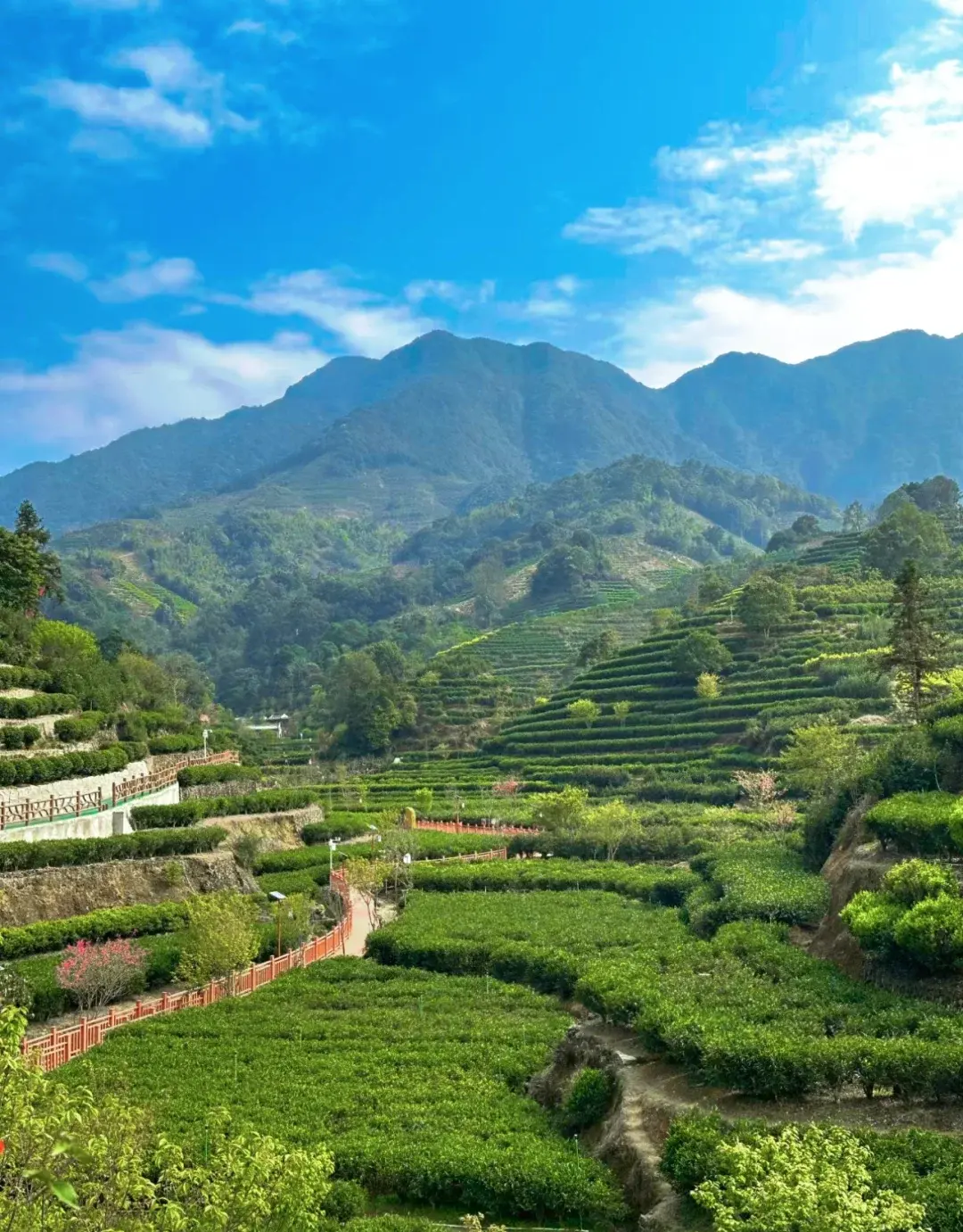
Located in Cháo'ān (潮安) district near Cháozhōu, the main peak stands at 1,497 m. The soil is well-drained sandstone. The microclimate features sea fogs and humid air. Dāncōng oolongs are made from old trees, each harvested individually at different times — "dān cōng" literally means "single bush." Today it is a botanical and cultivar group: about 200 numbered clones (aroma cultivars, xiāngzhī, 香枝) have been recorded. The most famous:
- Yā Shǐ Xiāng (鸭屎香, "duck shit aroma") — intensely floral (jasmine, gardenia), from high altitudes, despite the unappetising name.
- Mì Lán Xiāng (蜜兰香, "honey-orchid") — the most popular, with notes of honey and orchid.
- Yù Lán Xiāng (玉兰香, "magnolia") — rarer, with a dense, spicy bouquet. Also Zhī Lán Xiāng (芝兰香, "curly orchid") and Dōngmì (冬蜜, "winter honey").
Harvest occurs three times a year: spring, autumn (best for intensity of aroma), and winter (minimal). The roasting stage (bèi huǒ, 焙火) is critical: it fixes the aroma, increases sweetness, and adds smoky tones. → Dāncōng
Cháozhōu (潮州) — gōngfū chá tradition
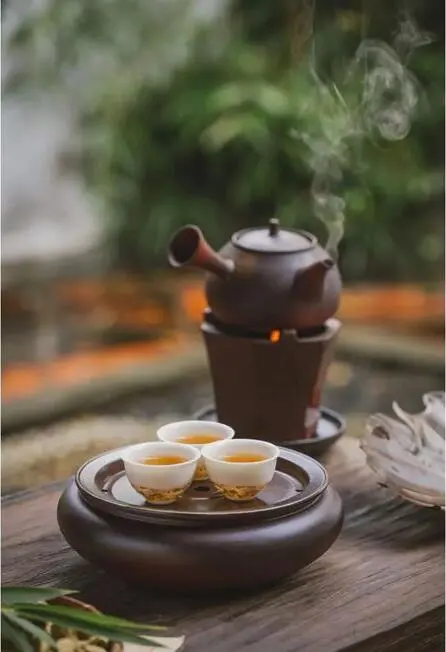
Cháozhōu is the capital of the formal gōngfū chá method: a small ceramic pot (cháhú, 茶壶) or gàiwǎn, three tiny cups (chá'ōu, 茶瓯), and many short infusions (brewing time 5–10 seconds). Scalding all utensils with boiling water is mandatory. The standard portion is 5–7 grams of dry tea per 100 ml of water. The tradition traces back to the Sòng dynasty (10th–13th centuries). → Cháozhōu Gōngfū Chá
Anhui (安徽) — Keemun and Huangshan
The inland province of Ānhuī is known for two distinct tea-growing areas separated by the Huángshān (黄山, "Yellow Mountains") range.
Qímén (祁门) — Keemun red tea
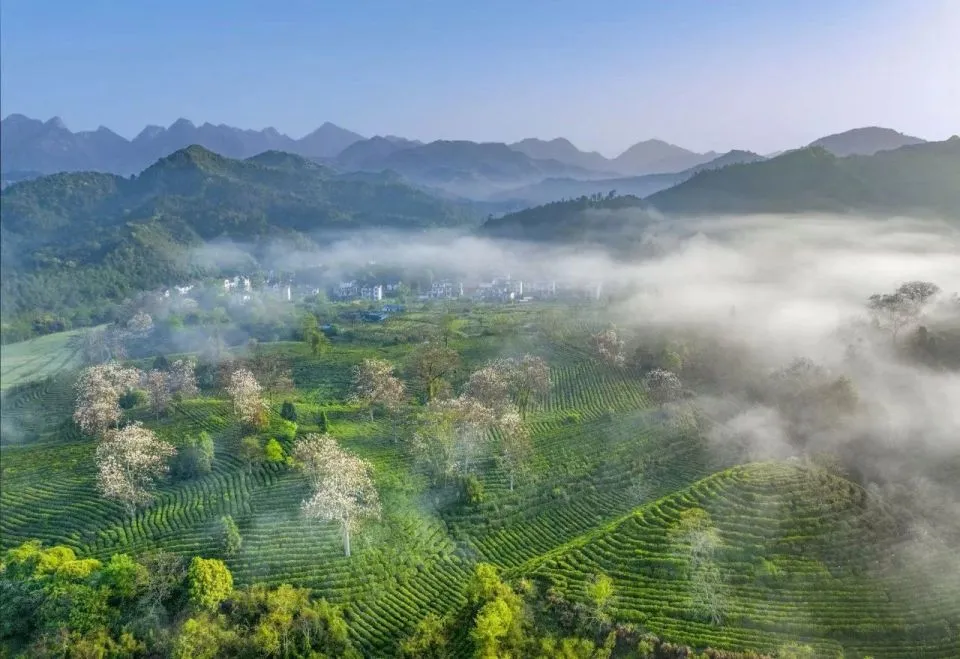
Qímén county in southwestern Ānhuī produces Qímén Hóngchá (祁门红茶) — Keemun — one of the "three great" Chinese red teas (alongside Zhèngshān Xiǎozhǒng and Diānhóng). It is China's most celebrated export red tea. Defined by the "Qímén aroma" (祁门香, Qímén xiāng): a complex floral-fruit bouquet with notes of rose, lychee, and dried fruit, softer and more elegant than Yunnan red. The cultivar used is Zhūyèzhǒng (槠叶种), a small-leaf form. Production follows a traditional artisanal process: withering, rolling, fermentation (30 minutes to several hours), and firing. Qímén Máofēng (祁门毛峰) is a less premium grade, but retains the characteristic aroma. → Ānhuī Red Tea
Huángshān (黄山) — mountain greens
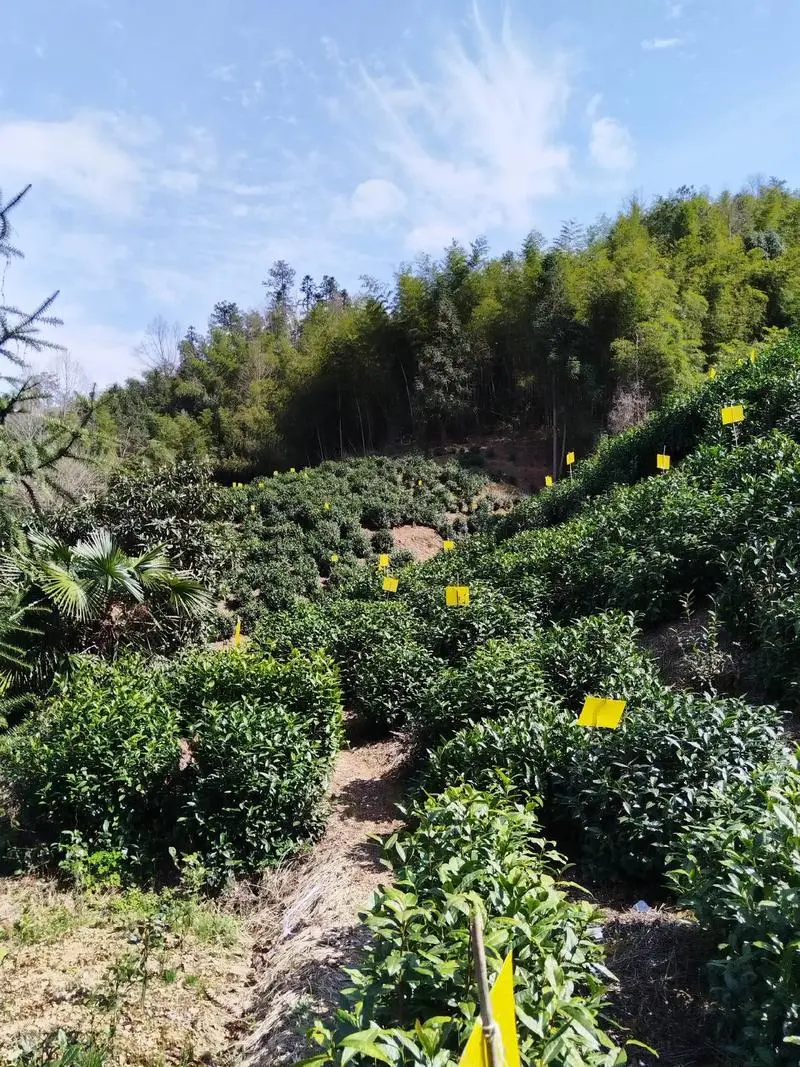
The Huángshān peaks (elevation up to 1,864 m) produce Huángshān Máofēng (黄山毛峰), one of China's ten famous teas — a delicate green with an orchid fragrance and sweet, vegetal character with a "misty" quality. Harvest occurs before Qīngmíng (清明, Pure Brightness) and before Gǔyǔ (谷雨, Grain Rain). Also from this region: Tàipíng Hóu Kuí (太平猴魁) — a flat-pressed green with a distinctive elongated leaf form (often 5–7 cm long). Made in Tàipíng county (now part of Huángshān), it is not twisted but pressed, giving it a more grassy, creamy flavour than Máofēng.
Zhejiang (浙江) — Longjing and the heart of Chinese green tea
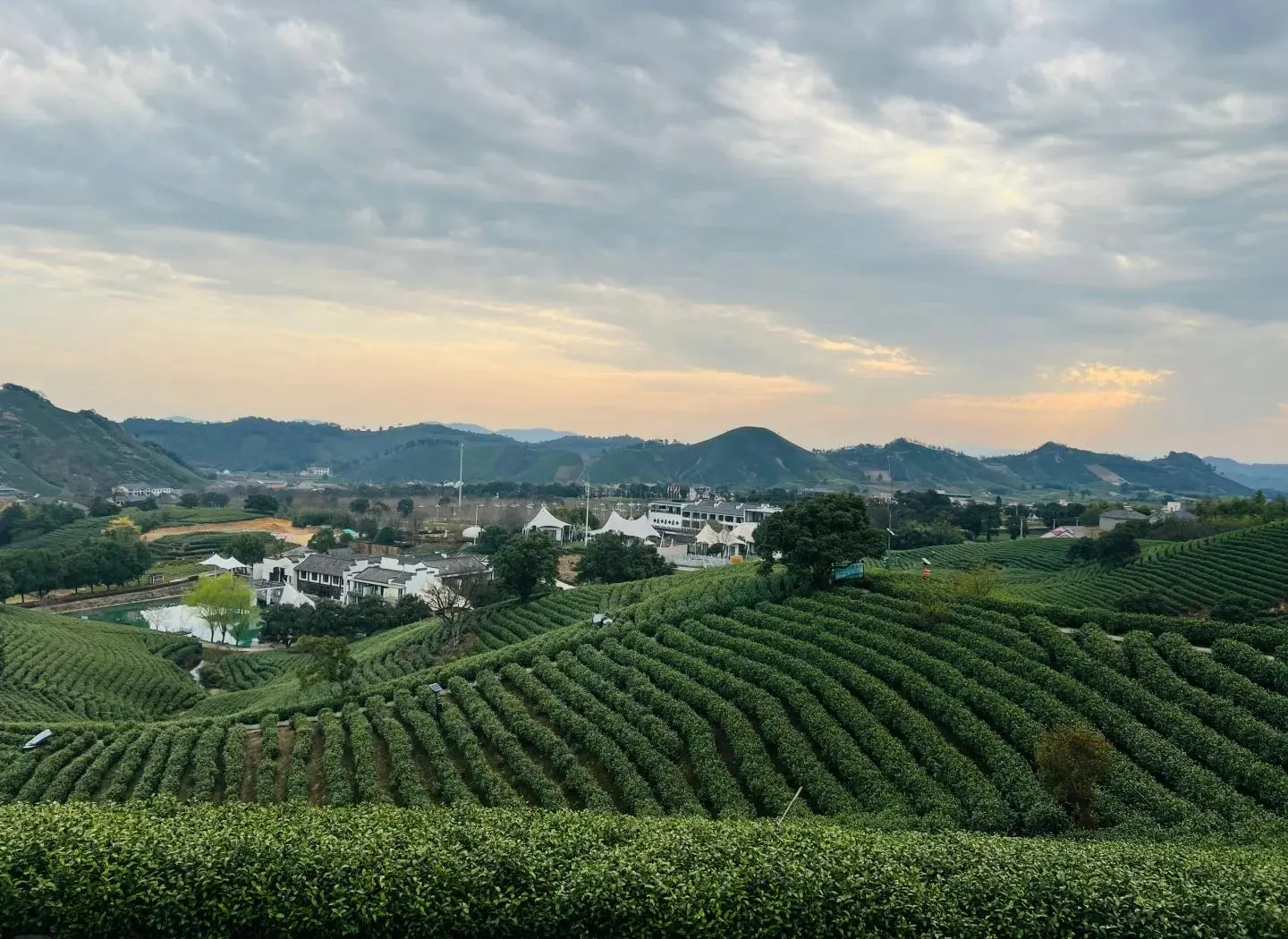
Zhèjiāng province, south of Shanghai, produces the most famous green tea in China: Lóngjǐng (龙井, Dragon Well). The most prestigious growing area is the West Lake (西湖, Xīhú) district of Hángzhōu — the five historic villages of Shīfēng (狮峰, "Lion Peak"), Lóngwǔ (龙坞), Wēngjiāshān (翁家山), Wèngjiālōng (翁家龙), and Hǔpào (虎跑). Lóngjǐng is pan-fired (chǎo, 炒, method "tíbái", 提白) — it is not steamed. During roasting, the leaves are flattened, giving them their characteristic flat shape. Three zones are distinguished: premium Xīhú Lóngjǐng (西湖龙井, protected GI), standard Hángzhōu Lóngjǐng, and provincial Qiántáng Lóngjǐng (钱塘龙井, along the Qiántáng River). Counterfeiting is rampant: up to 90% of "Lóngjǐng" sold in supermarkets is a cheap blend from Yunnan or Sichuan.
Also from Zhèjiāng: Ān Jí Bái Chá (安吉白茶) — a mutation of the Báiyèchá (白叶茶) cultivar with very low chlorophyll early in the season; the leaves turn pale green or even white. The taste is sweet, almost milky, without bitterness. Despite the name, it is a green tea (full withering, pan-fired), not a white tea. Jūnshān (君山) in Zhèjiāng once produced the classic yellow tea Jūnshān Yín Zhēn (君山银针) — now rare.
Jiangsu (江苏) — Bì Luó Chūn
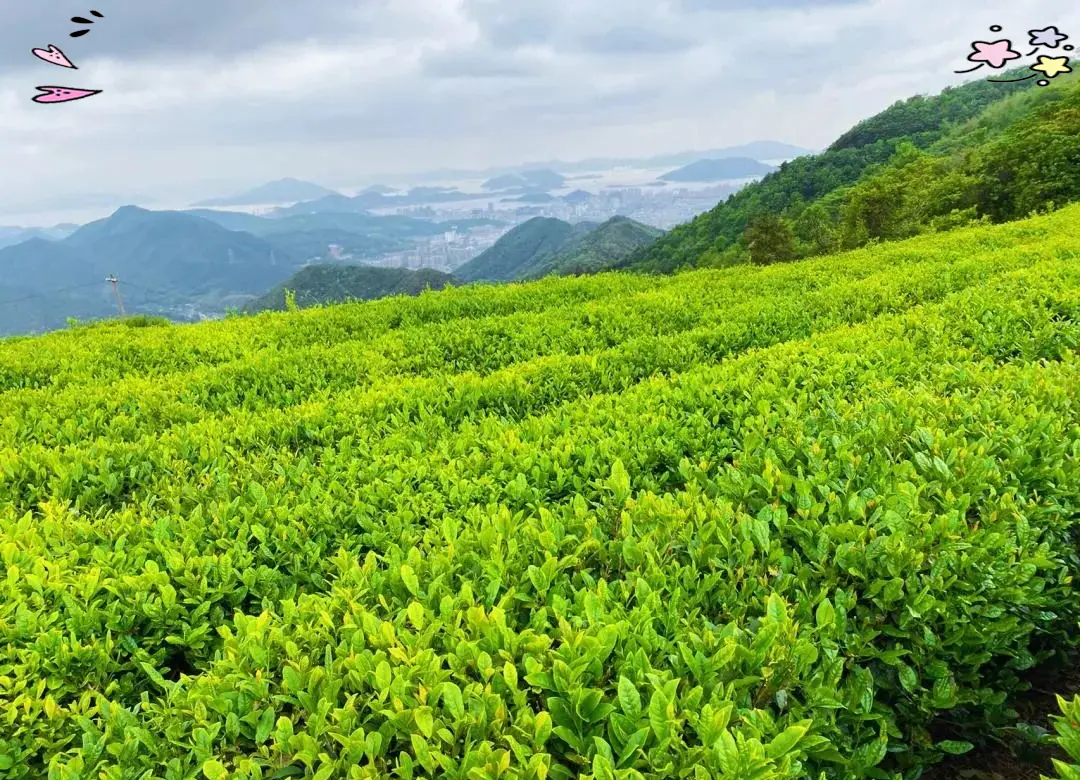
Jiāngsū's most celebrated tea grows on Dōngtíng Mountain (洞庭山) in Tàihú Lake near Sūzhōu. Bì Luó Chūn (碧螺春, "Green Snail Spring") is a tightly-rolled spring green with an intensely fruity, floral fragrance — the result of tea gardens interplanted with peach, plum, and apricot trees; the leaf absorbs the aromas of flowers and fruits. Bì Luó Chūn is one of China's ten famous teas. Harvest is strictly before Qīngmíng, by hand, one or two leaves with a bud. It has GI protection. → Bì Luó Chūn
Hunan (湖南) — dark teas
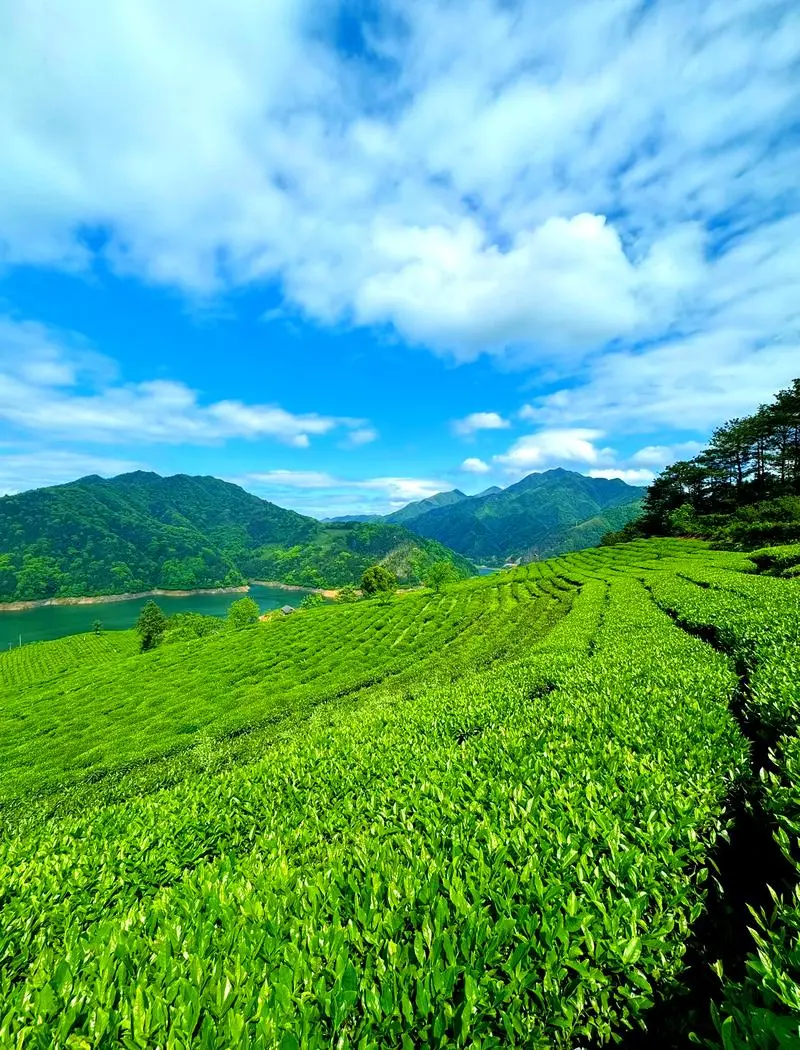
Húnán is the primary production province for hēichá (黑茶, dark tea — fermented, aged with mould). The key area is Ānhuà (安化) county in central Húnán, which produces several formats:
- Fú Zhuān (茯砖, "mushroom brick") — compressed tea with the mould Eurotium cristatum (golden flowers — jīnhuā, 金花). Safe and mandatory for high-quality hēichá.
- Qiān Liǎng Chá (千两茶, "thousand liangs" — a compressed log weighing ~37 kg, traditionally wrapped in bamboo and straw; aged for years).
- Raw dark tea — Hēichá Máo Chá (黑茶毛茶).
Ānhuà was a historic centre on the Tea Horse Route, passing through Húběi and Gānsù to Tibet. → Hēichá — Dark Tea
Guangxi (广西) — Liù Bǎo, Chéngméi
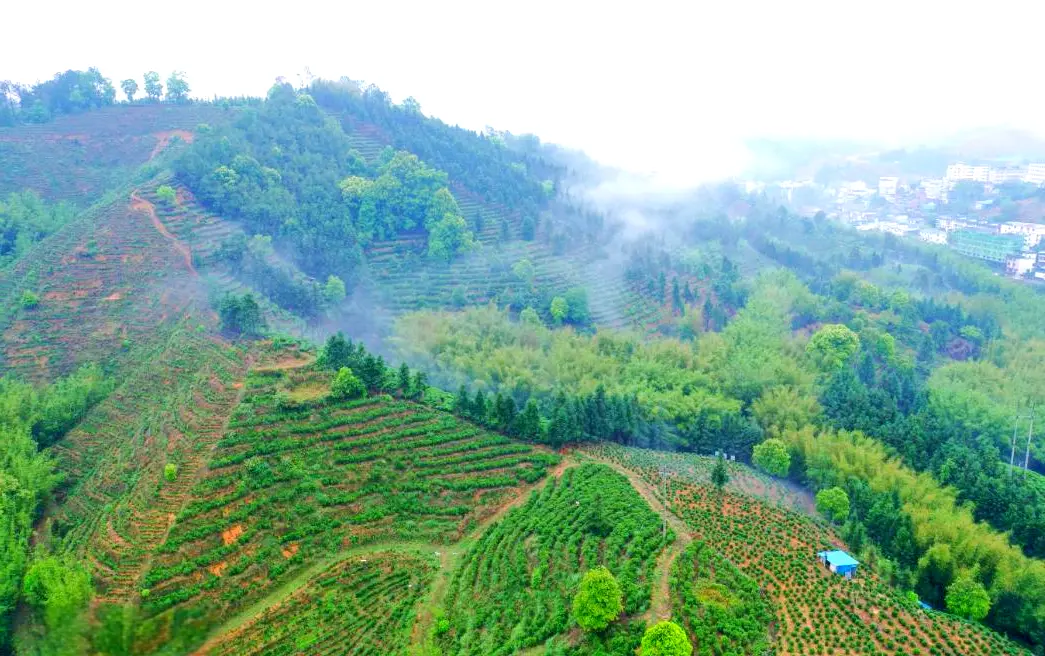
Guǎngxī's Wúzhōu (梧州) area produces Liù Bǎo (六堡, "six fortresses") — a traditionally fermented dark tea with a smooth, woody, slightly earthy character that improves with aging from 5 to 20 years. Historically exported to overseas Chinese communities in Malaysia and Singapore (tea for tin-mining workers). Also from Guangxi: Chéngméi Chá (橙梅茶), a rarer variant. Major factories include Wúzhōu Chéngméi.
Sichuan (四川) — ancient border teas
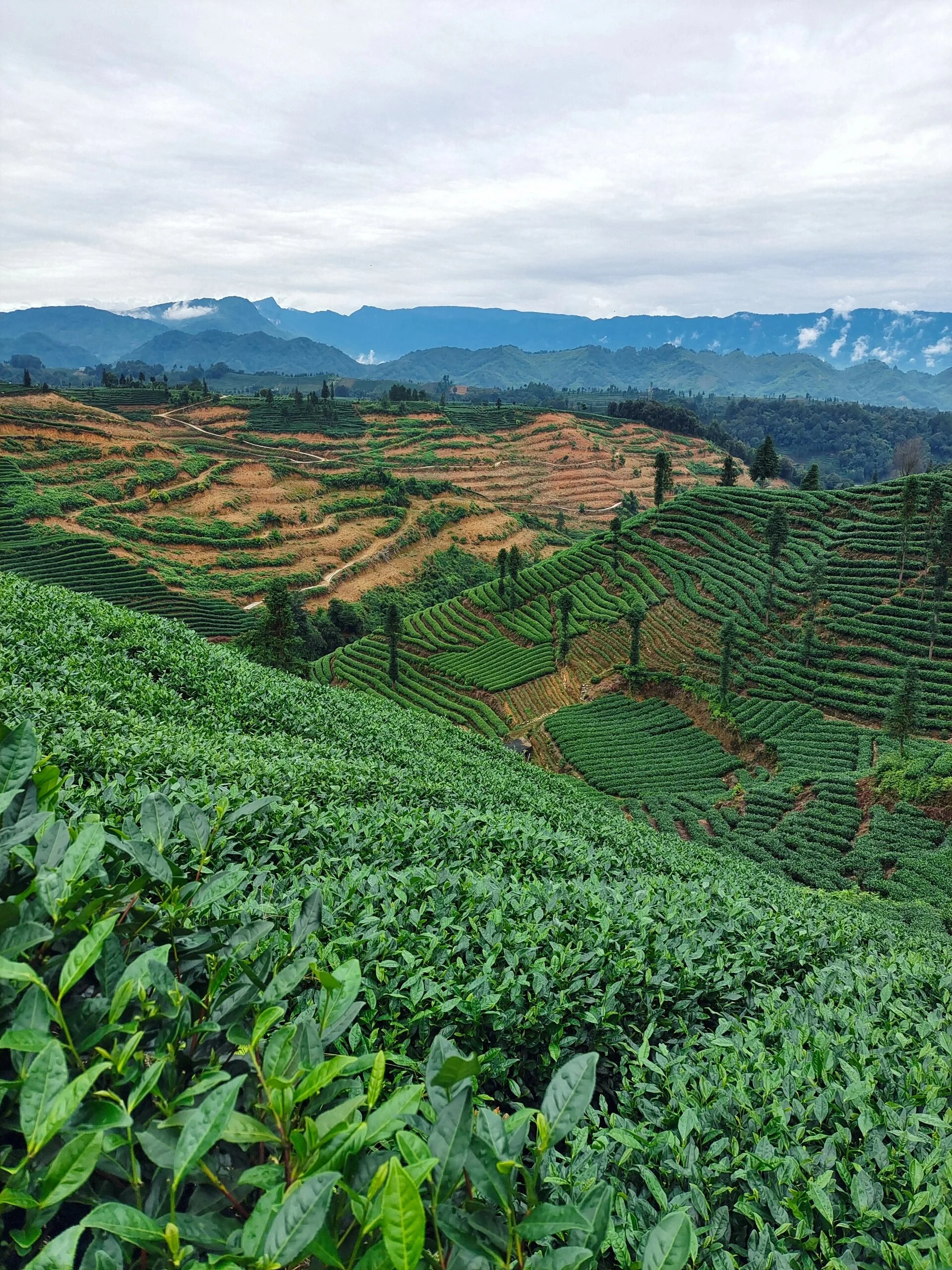
Sìchuān has one of the longest tea histories in China — the earliest reliable records of tea culture date to the Western Hàn dynasty (206 BCE–8 CE). The Měngdǐng (蒙顶) Mountain area near Yǎ'ān produced tribute teas for imperial dynasties. Měngdǐng Gān Lù (蒙顶甘露, "heavenly dew of Mount Měngdǐng") is a superb green tea with a soft, sweet, creamy taste; one of the ten famous teas. Měngdǐng Huáng Yá (蒙顶黄芽) is a yellow tea. Yǎ'ān borders Tibet and was the source of Zàng Chá (藏茶, Tibetan tea) — compressed dark tea traded along the ancient Chá Mǎ Gǔ Dào (茶马古道, Tea Horse Road). Today Sìchuān — one of the largest tea producers in China — produces both premium greens (including Yuèxī Cuì Méi, 越西翠眉) and raw material for dark tea.
Summary table
| Province | Key Region | Famous Teas | Category | Wiki |
|---|---|---|---|---|
| Fujian | Wǔyí Mountains | Dà Hóng Páo, Wǔyí Oolong, Lapsang Souchong, Jīn Jùn Méi | Oolong, Red | Wǔyí Oolong · Wǔyí Red |
| Fujian | Fúdīng / Zhènghe | Bái Háo Yín Zhēn, Bái Mǔ Dān | White | Yín Zhēn · Mǔ Dān |
| Fujian | Ānxī (Minnan) | Tiě Guānyīn | Oolong | Tiě Guānyīn |
| Fujian | Minnan broad | Zhāngpíng, Běi Bǔ Lǎo | Oolong | Minnan Oolong |
| Yunnan | Xīshuāngbǎnnà | Puerh shēng & shú, Lǎobānzhāng | Dark | Puerh · Lǎobānzhāng |
| Yunnan | Líncāng | Bīngdǎo, Jǐngmài | Dark | Shēng Puerh |
| Yunnan | Fèngqìng / Líncāng | Diānhóng | Red | Yunnan Red |
| Guangdong | Fènghuáng Mountain | Dāncōng oolongs | Oolong | Dāncōng |
| Guangdong | Cháozhōu | Gōngfū chá tradition | — | Cháozhōu Gōngfū |
| Anhui | Qímén | Keemun red | Red | Ānhuī Red |
| Anhui | Huángshān | Máofēng, Tàipíng Hóu Kuí | Green | — |
| Zhejiang | West Lake, Hángzhōu | Lóngjǐng (Dragon Well) | Green | — |
| Jiangsu | Dōngtíng / Sūzhōu | Bì Luó Chūn | Green | Bì Luó Chūn |
| Hunan | Ānhuà | Fú Zhuān, Qiān Liǎng | Dark | Hēichá |
| Guangxi | Wúzhōu | Liù Bǎo | Dark | — |
| Sichuan | Měngdǐng / Yǎ'ān | Gān Lù, Huáng Yá, Zàng Chá | Green, Dark | — |
FAQ
Is terroir in tea comparable to wine terroir? Meaningfully yes, and with similar debates about marketing inflation. Altitude, soil chemistry, rainfall, and microclimate measurably affect leaf chemistry — amino acid content, polyphenol profile, aromatic precursors. The same cultivar planted in Wǔyí produces a different tea than in Ānxī. However, processing skill is a larger variable in tea than in wine; a great terroir poorly processed produces an inferior cup. The Chinese concept of yán yùn (岩韵, "rock rhyme") in Wǔyí tea is a direct parallel to "minerality" in wine, only even more complex due to roasting and aging.
Does the harvest year matter for Chinese tea? Yes, significantly for some categories. Míng qián green teas and premium oolongs vary by spring weather — a cold or wet spring delays buds and affects amino acid concentration. Collectors of Wǔyí rock oolongs and shēng puerh track vintage years closely — referred to as nián chā (年差, "annual variation"). For everyday teas (mass-market red, standard oolongs), year-to-year variation is minor. A label reading 春茶 (chūn chá, spring tea) with a specific year indicates the producer considers seasonality an important quality indicator.
Which Chinese teas have geographical indication (GI) protection? Several major teas carry Chinese national GI status: Xīhú Lóngjǐng (West Lake Dragon Well) — Hángzhōu only; Dōngtíng Bì Luó Chūn — Sūzhōu area only; Ānxī Tiě Guānyīn; Qímén Hóngchá (Keemun); Pǔ'ěr — Yúnnán province only (since 2008). GI protection means the name is legally restricted to the origin, but enforcement varies; much "Lóngjǐng" and "Tiě Guānyīn" sold internationally is not from the protected zone. Up to 90% of "Lóngjǐng" in supermarkets is a hybrid from other provinces.
Why does Fujian produce such a diverse range of teas? Three factors converge. Geographically, the province straddles distinct climate zones — coastal humidity, interior mountains, and a range of altitudes from 0 to 1,864 m. The Wǔyí Mountains create a microclimate with fog and relatively stable temperatures, distinct from the southern lowlands; the northern coast has heavy sun hours ideal for white tea sun-withering. Historically, Fujian was the port of China's global tea trade from the 17th century onward — commercial pressure drove development of multiple product types (smoked oolong, compressed cake, light oolong) for different markets. The result is centuries of accumulated processing knowledge across multiple styles in one province.
Is tea tourism possible in Chinese tea regions? Yes — several regions have developed structured tea tourism. Wǔyí Shān has tea village visits and rock tea tastings in the Dānxiá landscape (UNESCO World Heritage). Hángzhōu's West Lake area includes guided Lóngjǐng garden tours, particularly in April during the spring harvest. Yúnnán's Xīshuāngbǎnnà offers ancient-tree puerh garden access. Cháozhōu is accessible for gōngfū chá cultural visits. Outside China, Táiwān's Alishan and Nantou districts are more easily navigable for international visitors and offer high-mountain oolong tastings.
Коментари (0)
Все още няма коментари. Бъдете първи!
Вход — Влезте, за да участвате в дискусията.